
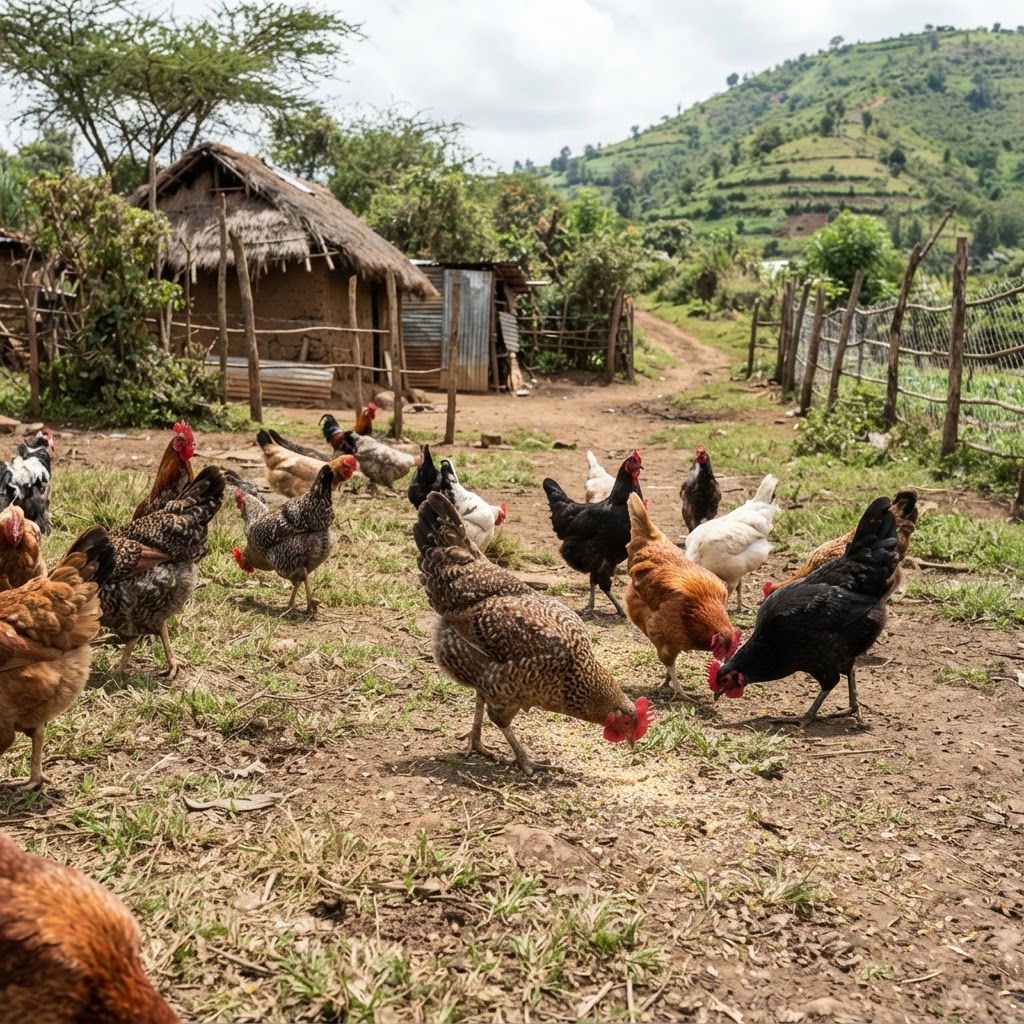
🐔Profitable Poultry Farming in Uganda: 2025 Best Practices
Poultry farming remains a cornerstone of food security and poverty alleviation for Ugandan households, offering a reliable income stream through both indigenous and commercial systems. As climate variability impacts traditional scavenging, adopting modern management practices is essential for maintaining productivity and profitability.
Diagnose your animal for free
Snap a photo of droppings, discharge, blood or a wound for an instant AI health guide — free for 3 analyses.
Top best practices
- Implement strict biosecurity measures, including footbaths and restricted access, to prevent disease outbreaks.
- Adopt the 'all-in, all-out' production system to break disease transmission cycles and manage flock age groups effectively.
- Maintain accurate farm records for feed consumption, mortality, and egg production to track profitability.
- Provide consistent access to clean, cool water, especially during peak temperatures to mitigate heat stress.
- Use precision debeaking for layers at 15 days and 8-10 weeks to prevent cannibalism and feed wastage.
- Prioritize regular vaccination schedules as recommended by local veterinary authorities to protect against common regional diseases.
- Ensure proper litter management to control ammonia levels and reduce respiratory health risks.
Latest 2024-2025 trends
Caring for your poultry (chicken)
Latest 2024–2025 guidance & organic disease control
Poultry (Chicken)
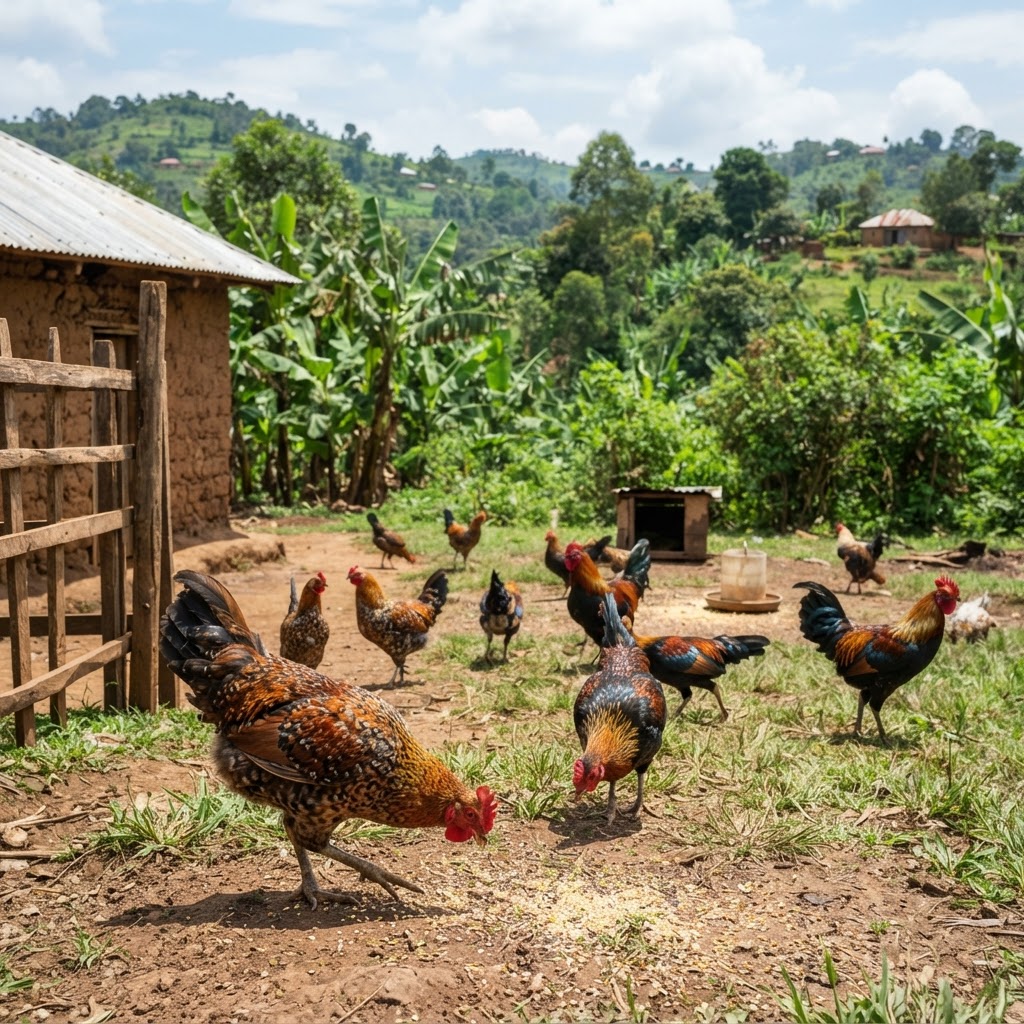
How to look afterPoultry is Uganda's most accessible livestock enterprise and a fast-growing commercial sector driven by rising demand for eggs and broiler meat. The 2024–25 push favours improved dual-purpose birds (Kuroiler, Rainbow Rooster, Sasso) in free-range and semi-intensive systems, with biosecure housing and vaccination against Newcastle and Gumboro. Clean water, quality feed, and strict biosecurity are the foundation of a profitable flock.
Newcastle Disease (NCD)
No cure — vaccinate chicks on schedule (NCD eye-drop at 2 weeks plus boosters), quarantine new birds, disinfect housing with ash or a neem wash, and control visitors. Burn dead birds and rest the pen.
Coccidiosis
Keep litter dry and clean and avoid wet feed. Add a little raw garlic and apple cider vinegar to the drinking water, ensure good ventilation, and treat the litter with agricultural lime.
Fowl pox (skin warts)
Vaccinate the flock, isolate affected birds, and dab neem oil or aloe vera gel on the scabs. Clear standing water to control mosquitoes and boost immunity with green feeds like amaranth and vegetable scraps.
Practical guides
Feeding & nutrition
Feed quality is the primary driver of productivity; avoid reliance on scavenging alone by providing balanced, age-appropriate rations. Given the prevalence of poor-quality commercial feeds, farmers should source from reputable suppliers and monitor for mycotoxins, ensuring feed is stored in dry, pest-free conditions.
Housing & handling
Construct well-ventilated, climate-resilient housing that provides adequate shade and protection from predators. Ensure the structure allows for uniform light distribution and easy cleaning to maintain hygiene and reduce stress-related respiratory issues.
Health & disease
Focus on preventative care by adhering to a strict vaccination calendar and maintaining high hygiene standards to minimize antimicrobial use. If disease occurs, prioritize laboratory diagnosis through local veterinary services rather than self-medicating to avoid resistance and ineffective treatment.
Breeding & genetics
For smallholders, consider dual-purpose breeds that offer both improved meat and egg production while retaining the hardiness of indigenous birds. Focus on selective breeding for desirable traits like growth rate and disease resistance rather than relying on random mating.
Market outlook
The demand for poultry products remains high in urban and peri-urban centers, with a growing market for both commercial broilers and improved indigenous chicken. Price volatility in feed ingredients remains a challenge, making efficient feed conversion and direct-to-market sales key to maintaining profit margins.
Sources
Apply this on your farm today
Farm Dashboard turns these best practices into action — track your poultry (chicken), record production and health, and see real profit numbers.
Monthly Farm Dashboard Newsletter
Get a monthly digest of what's happening across Farm Dashboard farms — best practices, common challenges and seasonal tips. No farm names, just practical insights for Ugandan & East African farmers.