
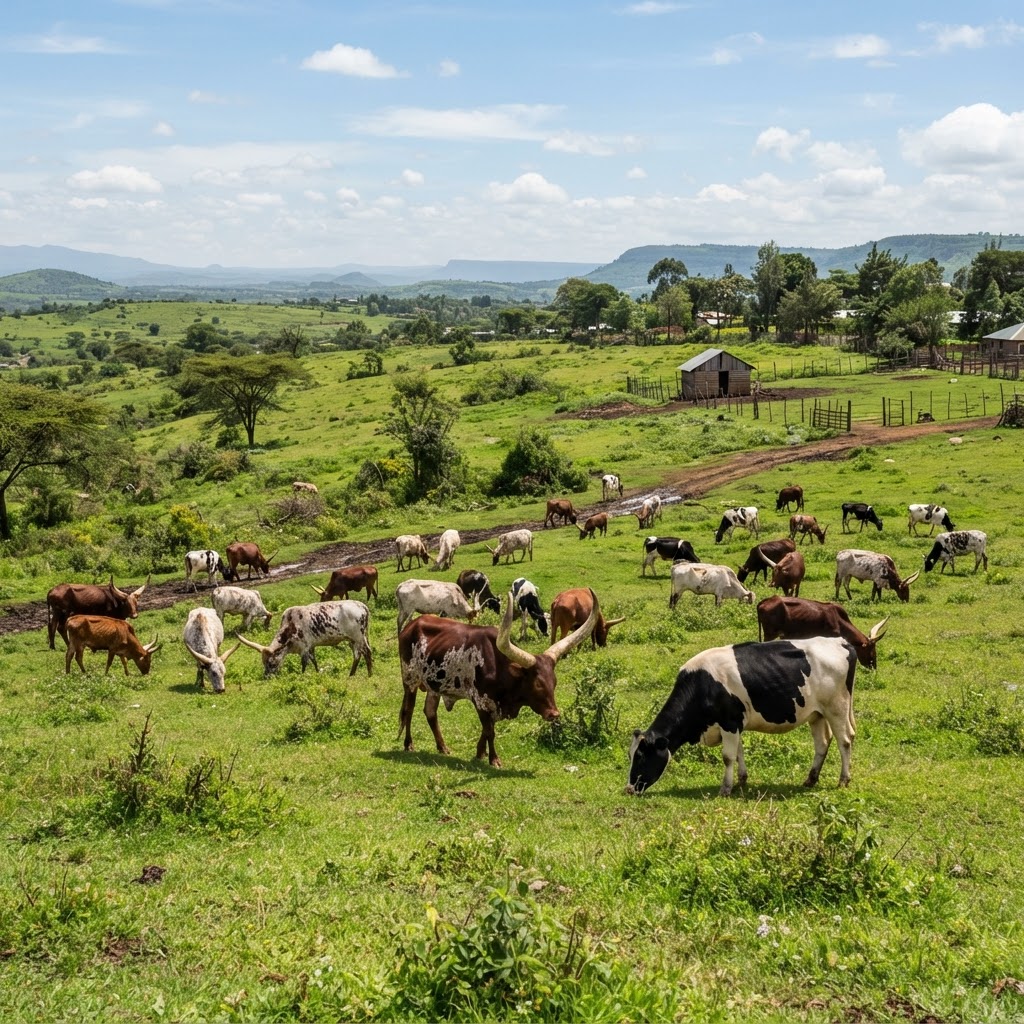
🐄Modernizing Cattle Farming: A Practical Guide for Ugandan Smallholders
Cattle farming is a cornerstone of Uganda's agricultural economy, supporting millions of households and serving as a primary driver of rural income. With the sector shifting toward commercialization, adopting improved husbandry and value-addition practices is essential for farmers to transition from subsistence to profitable, market-oriented production.
Diagnose your animal for free
Snap a photo of droppings, discharge, blood or a wound for an instant AI health guide — free for 3 analyses.
Top best practices
- Adopt systematic record-keeping using digital tools or logbooks to track milk yields, health, and breeding cycles.
- Prioritize consistent access to clean water and high-quality forage to maintain productivity during dry seasons.
- Implement strict tick control and vaccination schedules to reduce mortality and improve herd health.
- Join local milk collection centers or cooperatives to access better market prices and technical extension services.
- Focus on value addition by processing raw milk into products with longer shelf lives to mitigate market price volatility.
- Transition toward commercial farming models by investing in improved breeds that offer higher output per cow.
Latest 2024-2025 trends
Caring for your cattle (dairy & beef)
Latest 2024–2025 guidance & organic disease control
Cattle (Dairy & Beef)
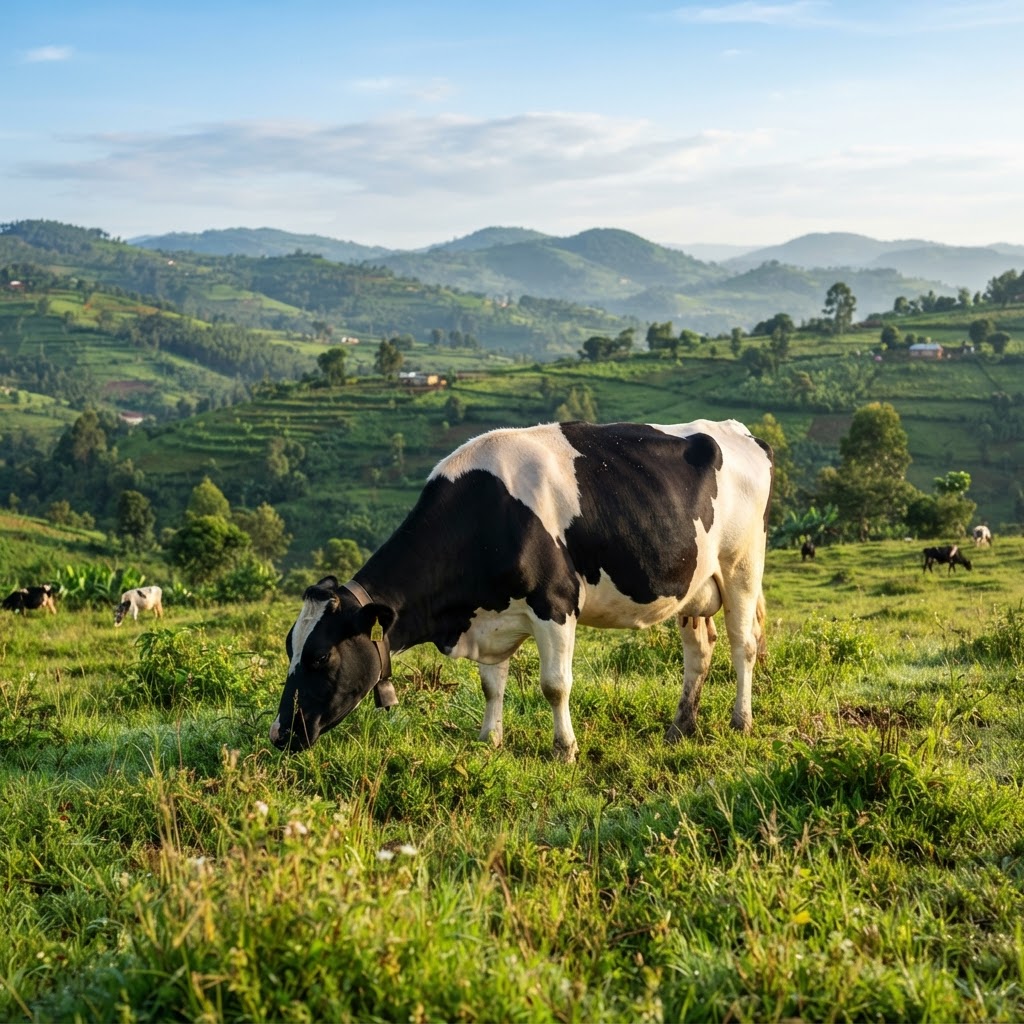
How to look afterCattle remain the flagship of Ugandan livestock — dairy for daily income and beef for growing urban and export markets. The 2024–25 focus is on improved Friesian × Ankole crossbreds for heat tolerance and milk yield, pasture improvement with napier and brachiaria grass, and silage to beat the dry-season feed gap. Ticks, mastitis and tick-borne fevers are the biggest profit-drainers, so regular dipping/spraying and clean milking routines are essential.
East Coast Fever (ECF, tick-borne)
Rotate pasture to break the tick cycle, dip or spray weekly with an acaricide or an organic neem + pyrethrum wash, clear bush around the kraal, and quarantine new animals before mixing with the herd.
Mastitis
Practise clean milking — wash and dry the udder first, strip-test for clots, and milk out completely. Apply a neem-based udder wash after milking, isolate affected cows, and feed garlic and aloe vera to support natural immunity.
Trypanosomiasis (Nagana, tsetse-borne)
Clear bush around grazing areas, deploy baited tsetse traps, keep trypanotolerant breeds (Ankole, Boran), and provide mineral licks year-round to maintain immunity.
Practical guides
Feeding & nutrition
Feed accounts for 60-70% of production costs, making efficient forage management critical. Farmers should prioritize planting high-quality fodder crops and utilizing silage or hay to supplement natural pastures, especially during the dry season, to ensure consistent milk production.
Housing & handling
Cattle should be kept in well-ventilated, clean, and dry structures that protect them from extreme weather and predators. Proper drainage and regular cleaning are essential to prevent hoof diseases and mastitis, which directly impact milk quality and volume.
Health & disease
Effective health management centers on preventative care, including regular deworming, tick control, and adherence to vaccination calendars for endemic diseases. Engaging with local veterinary officers for routine check-ups and maintaining a clean environment are the most cost-effective ways to prevent major losses.
Breeding & genetics
Farmers should move away from traditional, low-yield practices by adopting artificial insemination or using high-quality bulls to improve herd genetics. Focusing on breeds that are resilient to the local climate while offering higher milk or meat yields is key to long-term profitability.
Market outlook
Uganda’s dairy sector is increasingly export-oriented, with significant demand for processed milk products in regional markets. Farmers who focus on quality—specifically milk solids and fat content—are increasingly rewarded through new, performance-based payment systems.
Sources
Apply this on your farm today
Farm Dashboard turns these best practices into action — track your cattle (cows), record production and health, and see real profit numbers.
Monthly Farm Dashboard Newsletter
Get a monthly digest of what's happening across Farm Dashboard farms — best practices, common challenges and seasonal tips. No farm names, just practical insights for Ugandan & East African farmers.