🐐Profitable Goat Farming: A Practical Guide for Ugandan Smallholders
Goats are essential assets for Ugandan smallholders, providing a low-maintenance, climate-resilient source of income, high-quality protein, and manure for crop fertilization. They are particularly vital for empowering women and improving household nutrition in both pastoralist and sedentary farming communities.
Diagnose your animal for free
Snap a photo of droppings, discharge, blood or a wound for an instant AI health guide — free for 3 analyses.
Top best practices
- Prioritize indigenous breeds like Mubende or Small East African goats for their hardiness and local disease resistance.
- Implement a structured vaccination and deworming schedule to manage common parasites and vector-borne diseases.
- Adopt controlled breeding programs to improve meat weight and growth rates using superior bucks.
- Utilize zero-grazing or tethering during the rainy season to protect crops and prevent overgrazing.
- Establish fodder banks with drought-tolerant species to ensure feed availability during the dry season.
- Join or form local livestock groups to aggregate produce, share veterinary costs, and access better market prices.
- Maintain clean, dry, and well-ventilated housing to prevent respiratory infections and hoof rot.
Latest 2024-2025 trends
Caring for your goats
Latest 2024–2025 guidance & organic disease control
Goats
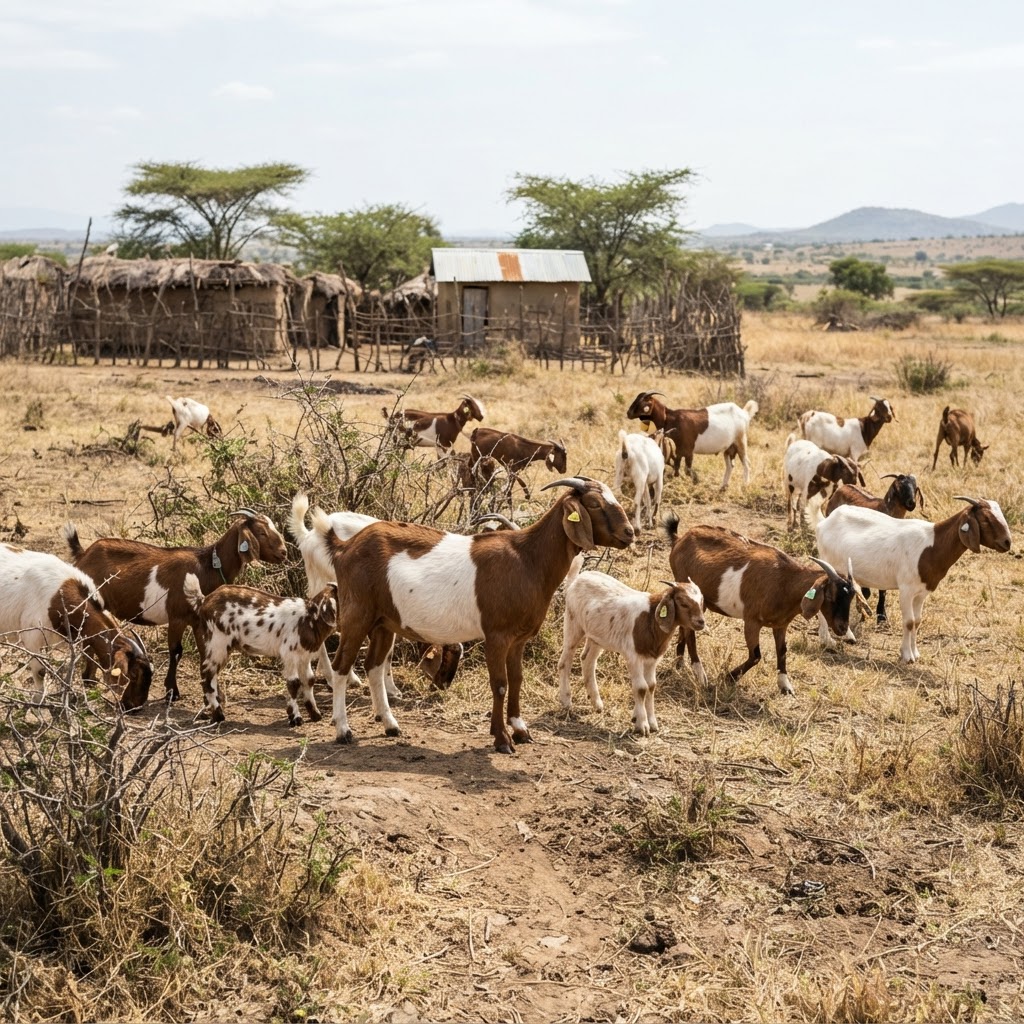
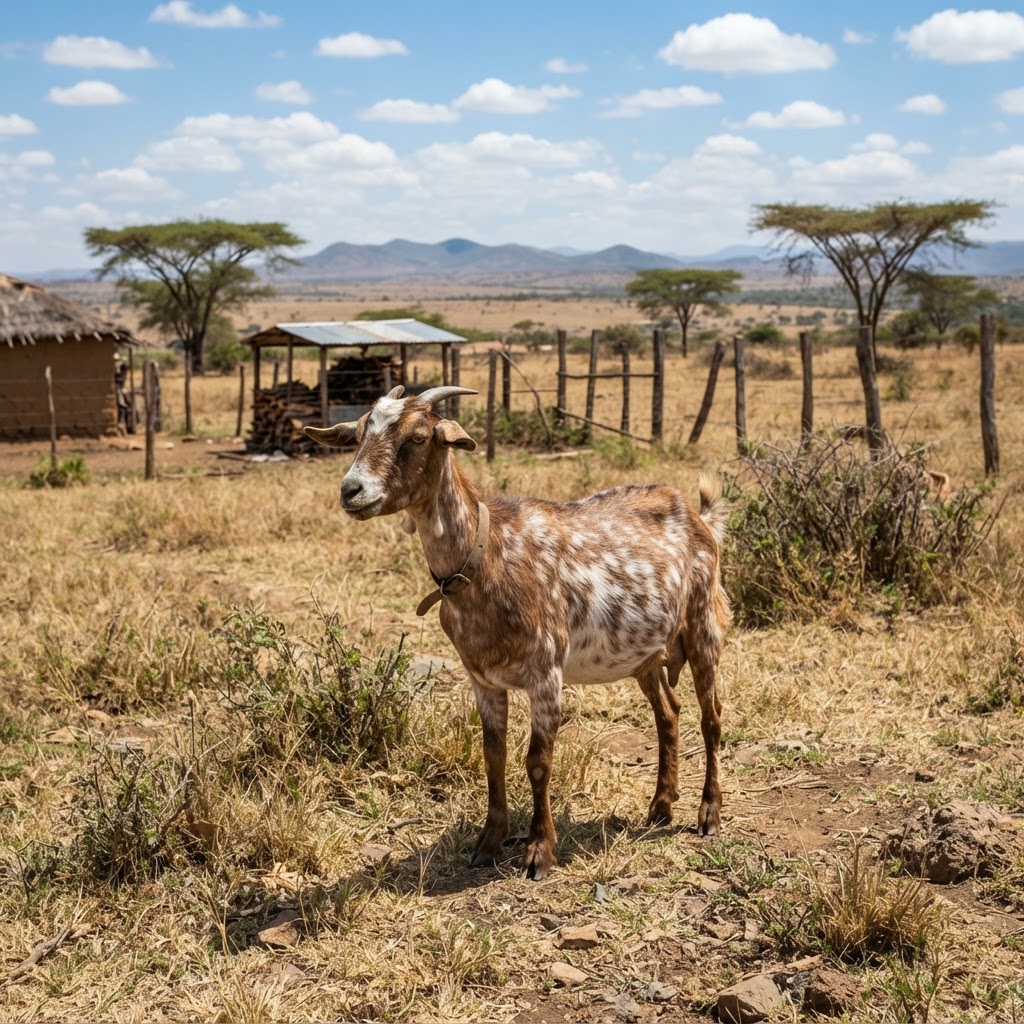
How to look afterGoats are the ideal smallholder enterprise in Uganda — low start-up cost, fast multiplication, and strong demand for meat and live exports during festive seasons. The 2024–25 trend favours improved meat breeds like Boar and Galla crosses with the local Mubende goat, raised on browse and crop residues. Raised slatted housing to prevent foot rot, access to clean water and mineral licks, and planned breeding are the keys to profitability.
Peste des Petits Ruminants (PPR)
No cure — vaccinate the whole herd annually, quarantine new stock, keep pens clean and dry, and maintain strong nutrition (browse, legumes, mineral licks) to support immunity. Burn and bury any dead animals.
Contagious Caprine Pleuropneumonia (CCPP)
House goats in well-ventilated, dry, raised pens and avoid overcrowding. Feed vitamin-rich greens, spray the pen with a neem solution, and isolate any coughing animal immediately.
Coccidiosis (kid scours)
Keep kids on dry slatted floors and avoid wet bedding. Provide clean water and fresh browse, give a mild oral rehydration (salt + honey + water), and dust the pen with agricultural lime or ash.
Practical guides
Feeding & nutrition
Maximize the use of locally available browse species, shrubs, and crop residues like bean husks or maize stover. During the dry season, supplement natural grazing with conserved fodder or silage to maintain body condition and productivity.
Housing & handling
Construct raised, slatted-floor houses to keep goats off damp ground and allow manure to fall through for easy collection. Ensure the structure is well-ventilated, predator-proof, and provides adequate space to prevent overcrowding.
Health & disease
Focus on prevention through regular dipping or spraying to control ticks and mites, which carry diseases like heartwater and trypanosomiasis. Consult local veterinary officers for routine deworming and vaccination against Peste des Petits Ruminants (PPR) and Foot and Mouth Disease.
Breeding & genetics
Select the best-performing indigenous does and cross them with improved meat breeds like the Savannah or Boer to enhance carcass weight. Keep accurate records of kidding dates and growth rates to identify and cull unproductive animals.
Market outlook
Demand for goat meat is rising steadily in urban centers and regional markets, driven by population growth and increasing incomes. Farmers who aggregate their stock for bulk sales can command significantly higher prices than those selling individual animals at the farm gate.
Sources
Apply this on your farm today
Farm Dashboard turns these best practices into action — track your goats, record production and health, and see real profit numbers.
Monthly Farm Dashboard Newsletter
Get a monthly digest of what's happening across Farm Dashboard farms — best practices, common challenges and seasonal tips. No farm names, just practical insights for Ugandan & East African farmers.