
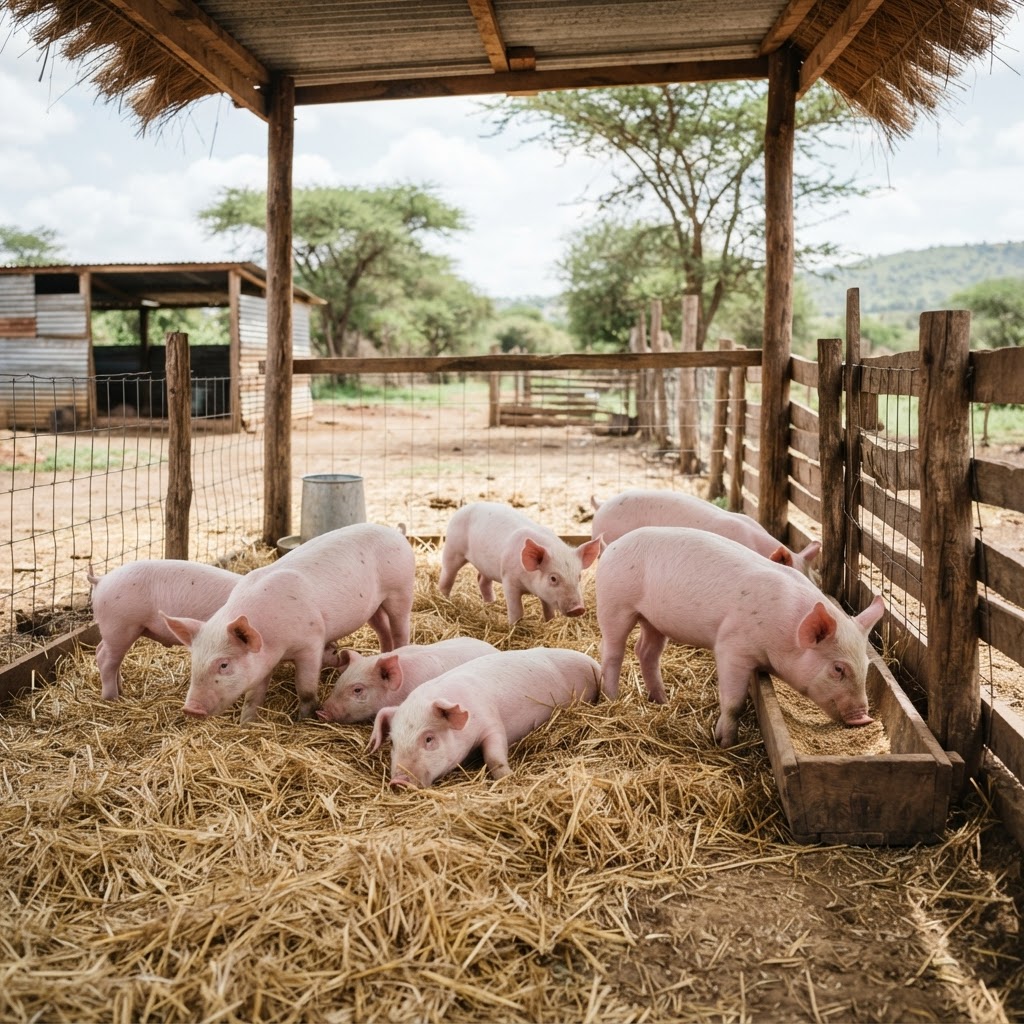
🐷Profitable Pig Farming: A Practical Guide for Ugandan Smallholders
Pig farming is a vital livelihood activity in Uganda, providing essential income and food security for over two million households. With the highest per capita pork consumption in East Africa, the sector offers significant potential for smallholder farmers to improve their economic status through improved husbandry.
Diagnose your animal for free
Snap a photo of droppings, discharge, blood or a wound for an instant AI health guide — free for 3 analyses.
Top best practices
- Transition from free-range or tethering to permanent, well-ventilated pig sties to improve biosecurity and growth rates.
- Implement strict farm-level biosecurity to prevent the introduction of African Swine Fever (ASF), the industry's greatest threat.
- Adopt a structured record-keeping system to track feed intake, growth performance, and reproductive cycles.
- Regularly deworm pigs and maintain a consistent vaccination schedule in consultation with local veterinary officers.
- Utilize locally available crop residues like sweet potato vines and cassava leaves, but process them correctly to reduce anti-nutritional factors.
- Invest in improved breeds or crossbreeds to achieve better feed conversion efficiency compared to local indigenous breeds.
- Engage in collective marketing through farmer groups to increase bargaining power and access better market prices.
Latest 2024-2025 trends
Caring for your pigs
Latest 2024–2025 guidance & organic disease control
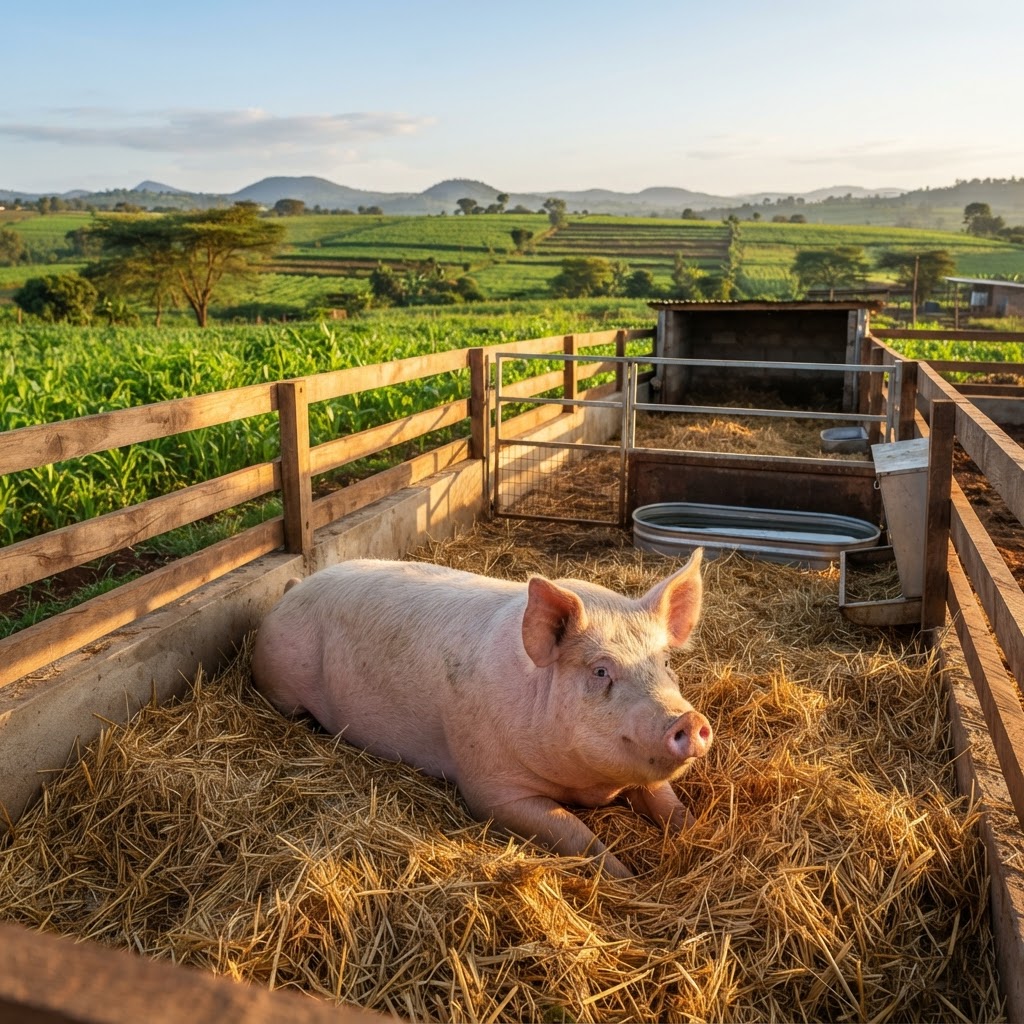
Pigs
How to look afterPigs are Uganda's fastest-growing livestock enterprise thanks to rising urban pork demand in Kampala and the best feed-to-meat conversion of any farm animal. The 2024–25 push is toward improved crosses (Large White × Landrace and Camborough sows), biosecure housing with concrete floors and good drainage, and balanced rations from locally available maize bran, sunflower cake and brewers' waste. Clean drinking water, deworming every 3 months, and good ventilation are non-negotiable for profit.
African Swine Fever (ASF)
No cure — prevention only. Keep pig-proof double-fenced pens, never feed raw swill (boil all kitchen waste for 30 minutes), quarantine new stock for 30 days, and disinfect footwear and tools with ash or agricultural lime at the entrance. Report any outbreak immediately.
Erysipelas (Diamond skin disease)
Keep pens dry and clean, rotate pasture, boost immunity with vitamin-rich greens (sweet potato vines, amaranth), and apply a neem-oil wash on affected skin. Isolate sick animals straight away.
Piglet scours (diarrhoea)
Ensure piglets take colostrum within hours of birth, keep the farrowing pen warm and dry with straw, give clean water early, and give an oral rehydration of salt + honey + water. Spray the pen with a neem solution to curb bacteria.
Practical guides
Feeding & nutrition
Feed management is the primary driver of profitability; farmers should balance concentrated feeds with high-quality, processed crop residues. Avoid feeding fresh cassava leaves or sweet potato vines in excess due to anti-nutritional factors; instead, ensile or dry them to improve safety and storage quality.
Housing & handling
Construct sturdy, easy-to-clean pig sties with concrete floors to facilitate hygiene and waste management. Ensure the housing provides adequate ventilation to mitigate heat stress and allows for the separation of pigs by age and production stage.
Health & disease
African Swine Fever (ASF) and gastrointestinal worms are the most critical health challenges; prioritize strict movement control and sanitation to manage ASF. Establish a routine health program that includes regular deworming and iron injections for piglets to prevent anemia and ensure optimal growth.
Breeding & genetics
Focus on selecting sows with good mothering ability and boars with high growth potential to improve herd genetics. Many smallholders successfully operate farrow-to-weaner or farrow-to-finish systems; choose the model that best aligns with your available land, capital, and market access.
Market outlook
Demand for pork in Uganda continues to rise due to rapid urbanization and changing consumer preferences. Farmers who produce consistent, high-quality pigs and establish direct links to urban markets or local butcheries are best positioned to capture the growing value in the pork chain.
Sources
Apply this on your farm today
Farm Dashboard turns these best practices into action — track your pigs, record production and health, and see real profit numbers.
Monthly Farm Dashboard Newsletter
Get a monthly digest of what's happening across Farm Dashboard farms — best practices, common challenges and seasonal tips. No farm names, just practical insights for Ugandan & East African farmers.